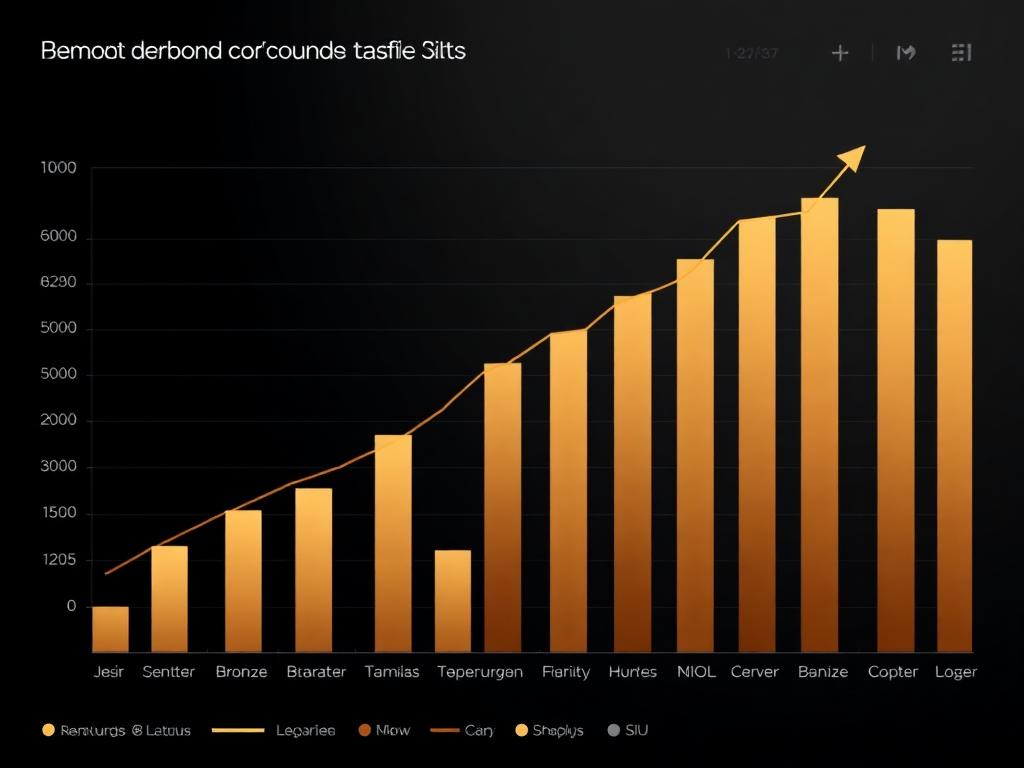
Why most seo services campaigns underperform
The Australian market for seo services has changed dramatically in the last three years. Search behaviour is more localised, buyer intent has become sharper, and the businesses that win the top positions are the ones treating seo services as an integrated growth system — not a single-lever tactic. Most operators still run it as a checklist: publish a page, add a few keywords, wait. That approach hasn't worked since 2019.
What Google, Meta, and every major discovery platform now reward is depth, consistency, and demonstrable expertise. That means your seo servicesstrategy has to align content, technical fundamentals, conversion pathways, and measurement into one coherent motion. When any one of those pillars is weak, the entire campaign compounds slower — or plateaus entirely. This is the single biggest reason businesses feel like they're "doing SEO" or "running ads" but not seeing real pipeline movement.
What separates the top 3% of Australian operators
After running seo services for hundreds of Australian businesses across trades, professional services, and local commerce, the pattern is consistent. The operators who dominate their market share four traits: they invest for 90-day horizons rather than 30-day windows, they measure booked jobs rather than clicks, they own their data instead of trusting an agency's polished PDF, and they treat every channel as connected — SEO feeding paid, paid feeding CRO, CRO feeding reputation. That's the flywheel we build for every client.
It's not about spending more. Some of our best-performing accounts spend mid-market budgets — they simply spend them against the right keywords, the right geographies, and the right creative angles. When the fundamentals are aligned, efficiency compounds. When they're not, no budget rescues it.
How Digital Grace Marketing approaches seo services
Every engagement starts with a diagnostic — not a template. We audit your current position, your competitors' positions, your conversion architecture, and your measurement stack before we recommend a single tactic. From there we build a 90-day roadmap prioritised strictly by expected impact on qualified leads and booked revenue. Every action ships with a hypothesis, a metric, and a review date. Nothing gets built "because agencies build it."
You'll work directly with a senior strategist — not a junior account manager relaying messages. That's not a marketing line; it's the operating model. Our team is deliberately small so accountability stays with the person doing the work. If a decision has to be made about your account, the person making it is the person you can call.
What to expect in your first 90 days
Weeks 1–2 are diagnostic and setup: full audit, competitor teardown, measurement fixed, quick wins identified. Weeks 3–6 are foundational execution: on-page, technical, creative, or landing infrastructure depending on your channel. Weeks 7–12 are compounding: iteration on what's working, ruthless cutting of what isn't, and preparation to scale. By the end of the quarter you should have a clear read on channel economics and a defensible plan for the following 90 days.
We keep engagements month-to-month for a reason. If we're not producing, you shouldn't be locked in. Our retention rate — 94% past 12 months — is a byproduct of that discipline, not a contract clause.